


Precious Metals Roar Higher as Gold Breaches $5,100
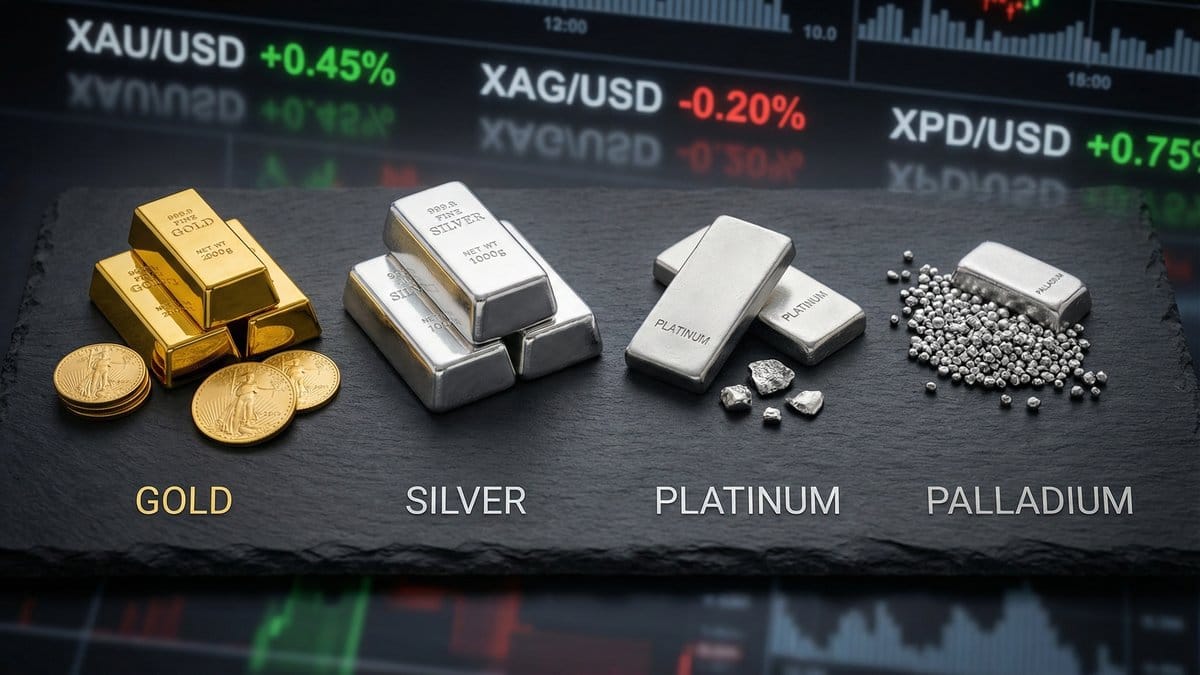
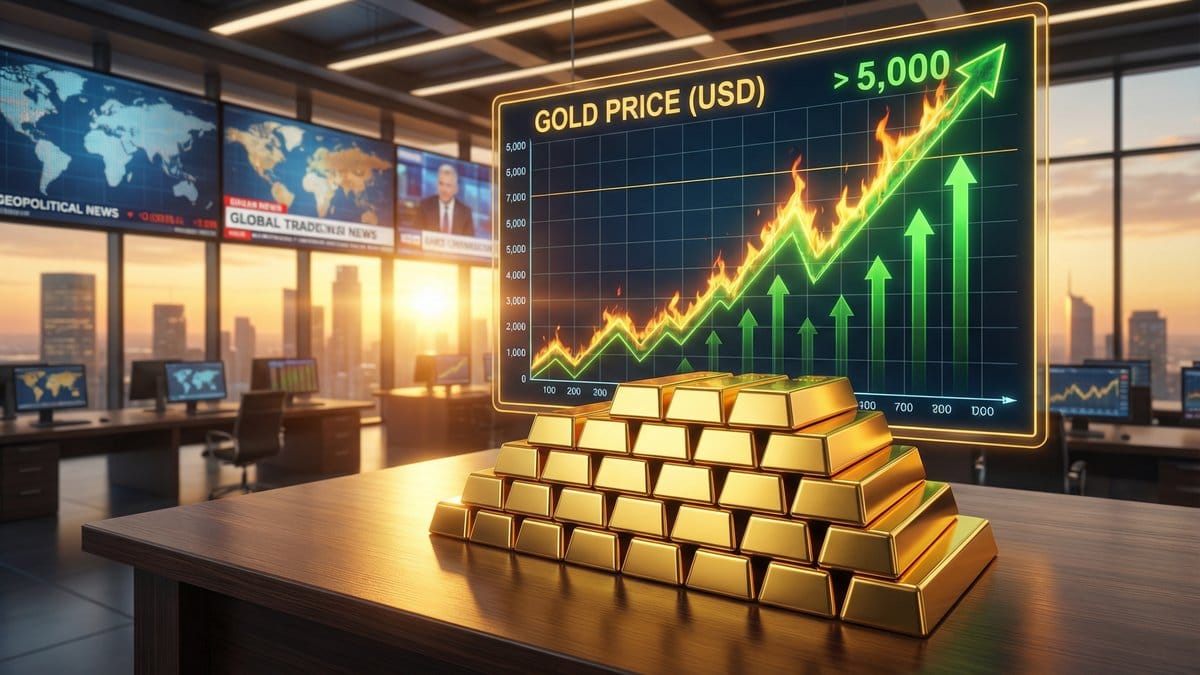
The precious metals complex has started 2026 with a powerful rally, as gold, silver, platinum, and palladium all posted significant gains. Gold led the charge, surging past the critical $5,100 per ounce milestone to fresh all-time highs. Silver also experienced a dramatic move, breaking above $108 per ounce. The broad-based strength reflects a confluence of factors, including escalating geopolitical tensions, sustained central bank buying, and a robust outlook for industrial demand. As of January 26, 2026, spot gold was trading around $5,095/oz, silver at $108.60/oz, platinum at $2,879/oz, and palladium at $2,104/oz, with all four metals showing strong upward momentum.
Gold Market Analysis: Geopolitical Risk and Central Banks Drive Record Highs
Gold’s ascent has been fueled by its traditional role as a safe-haven asset amid a landscape of increasing global uncertainty. Recent geopolitical flashpoints in Greenland, Venezuela, and the Middle East have prompted investors to seek shelter in the yellow metal, hedging against instability. This flight to safety has been amplified by significant and consistent purchases from central banks, particularly in emerging markets, which are diversifying their reserves away from the US dollar. Goldman Sachs recently revised its December 2026 gold price forecast upward to $5,400 per ounce, citing the broadening demand base and sticky macro-policy hedges. Analysts at Union Bancaire Privée (UBP) also anticipate another strong year for gold, with a year-end target of $5,200 per ounce, driven by ongoing retail and institutional investment.
Investment implications: The current environment suggests that gold’s rally may have further to run. The combination of persistent geopolitical risk, central bank demand, and concerns over fiscal sustainability in major economies provides a strong fundamental underpinning for prices. Investors are increasingly using gold not just as a tactical hedge but as a core portfolio holding to protect against the erosion of purchasing power.
Silver Market Analysis: Industrial Demand and Supply Deficits Fuel Outperformance
Silver has been a standout performer, outpacing even gold in percentage terms over the past year. The white metal’s rally is a tale of two powerful forces: soaring industrial demand and a structural supply deficit. Over half of all silver consumption now comes from industrial applications, particularly in the green energy and technology sectors. The manufacturing of solar panels and electric vehicles (EVs), both of which require significant amounts of silver, continues to accelerate globally. This robust industrial demand is running headlong into a constrained supply picture. The silver market has been in a deficit for several years, and since most silver is mined as a byproduct of other metals like copper and lead, ramping up primary production is challenging. This fundamental imbalance between supply and demand has created a tight physical market, with reports of significant premiums being paid in certain regions.
Investment implications: Silver’s dual nature as both a precious and industrial metal gives it a unique risk-reward profile. While it benefits from the same safe-haven demand as gold, its industrial component provides an additional, powerful driver. The ongoing supply deficit suggests that prices could remain well-supported and potentially experience further explosive moves. However, its higher volatility means it carries more risk than gold, particularly if a global economic slowdown were to impact industrial consumption.
Platinum & Palladium Update: Automotive Sector in Focus
Platinum Group Metals (PGMs) have also joined the precious metals rally, with both platinum and palladium posting impressive gains. The automotive industry remains the single most important driver for these metals, accounting for approximately 40% of platinum demand and a staggering 80% of palladium demand. Both are critical components in catalytic converters used to reduce harmful emissions from internal combustion engine (ICE) vehicles. As global emissions standards tighten, the demand for PGMs in this application remains robust. However, the supply side is facing significant headwinds. South Africa, which accounts for over 70% of global platinum production, is grappling with power outages and aging infrastructure, while sanctions on Russia, another major producer, have further constrained the market. This has left the platinum market in a persistent deficit, providing strong support for prices.
Mining Stocks & ETFs: Leveraging the Metals Rally
The surge in precious metals prices has provided a powerful tailwind for mining stocks and related exchange-traded funds (ETFs). Shares of major producers like Newmont (NEM) and Barrick Gold (GOLD) have seen strong performance, as have silver miners such as Pan American Silver (PAAS). These equities offer a leveraged play on the underlying commodity prices, as higher metal prices can lead to significantly expanded profit margins. Companies with operations in stable jurisdictions and a strong track record of production are attracting the most investor interest. ETFs like the SPDR Gold Shares (GLD) and the iShares Silver Trust (SLV) have also experienced massive inflows as investors seek convenient exposure to the price movements of gold and silver without having to hold the physical metal.
Investment implications: Investing in mining stocks offers the potential for greater returns than holding the physical metals, but it also comes with higher risk. Company-specific factors, such as operational efficiency, political risk in mining jurisdictions, and management effectiveness, can all impact stock performance. For investors seeking a more direct but still leveraged exposure, ETFs remain a popular and liquid option.
Disclaimer: This analysis is for informational and educational purposes only and should not be considered financial advice. Precious metals investments carry significant price volatility and market risks. Always conduct your own research and consult with a qualified financial advisor before making investment decisions.