




Energy Market Overview
The global energy sector is currently navigating a complex landscape defined by geopolitical tensions, shifting supply-demand dynamics, and an accelerating transition toward renewable sources. As of early April 2026, commodity markets are experiencing significant volatility, driven primarily by disruptions in key transit routes and robust international demand. Crude oil prices have surged, with the Brent benchmark crossing the $100 per barrel threshold, reflecting heightened risk premiums associated with Middle East instability. Simultaneously, natural gas markets are presenting a bifurcated picture; while domestic U.S. prices remain relatively subdued due to strong production, international benchmarks are trading at substantial premiums, incentivizing record levels of liquefied natural gas (LNG) exports.
Against this backdrop of fossil fuel volatility, the renewable energy sector continues its structural expansion. Investments in solar, wind, and battery storage are reaching unprecedented levels, supported by both federal incentives and improving project economics. The U.S. Energy Information Administration (EIA) projects that renewables will account for the vast majority of new electricity generation capacity additions in the coming years. This dual narrative — immediate supply concerns in traditional energy markets coupled with long-term structural growth in clean energy — is creating a dynamic environment for energy investors, requiring a nuanced approach to portfolio allocation across both established oil and gas majors and emerging renewable infrastructure plays.
Oil Market Analysis
The crude oil market has experienced a dramatic upward trajectory in recent weeks, primarily catalyzed by geopolitical developments in the Middle East. The Brent crude benchmark recently breached $100 per barrel, representing a significant increase from earlier in the year. This price action is largely attributable to concerns surrounding the Strait of Hormuz, a critical maritime chokepoint that handles approximately 20% of global crude and liquefied natural gas flows. The potential for prolonged disruptions in this region has injected a substantial risk premium into oil futures, overshadowing broader macroeconomic concerns that might otherwise weigh on demand.
On the supply side, the Organization of the Petroleum Exporting Countries and its allies (OPEC+) have responded to these market dynamics with measured adjustments. The cartel recently announced plans to hike crude production quotas by a modest 206,000 barrels per day starting in May 2026. However, market analysts note that this increase represents only a fraction of global demand and may be insufficient to fully offset potential supply shocks. Meanwhile, U.S. domestic production remains robust, with the EIA forecasting crude oil output to reach 13.51 million barrels per day in 2026, before expanding further to 13.94 million barrels per day in 2027. This strong domestic output is serving as a crucial buffer against international supply constraints, though it cannot entirely insulate domestic markets from global price movements. WTI crude has been trading in the $97–$103 range, while Brent has oscillated between $95 and $101, reflecting both the underlying supply anxiety and the partial relief provided by ceasefire talks.
Investment implications: The current high-price environment is highly favorable for upstream exploration and production companies, particularly those with significant assets in stable jurisdictions like the U.S. Permian Basin. These firms are generating substantial free cash flow, which is increasingly being directed toward shareholder returns via dividends and share repurchases. However, investors should remain cognizant of the inherent volatility in commodity markets; a sudden de-escalation of geopolitical tensions could precipitate a rapid price correction. Consequently, focusing on companies with low breakeven costs and strong balance sheets remains a prudent strategy for navigating the current oil market landscape.
Natural Gas & LNG
The natural gas market is currently characterized by a stark divergence between domestic U.S. pricing and international benchmarks. Domestically, Henry Hub spot prices have remained relatively constrained, hovering around the $3.00 per MMBtu mark. This subdued pricing environment is primarily the result of robust domestic production, particularly associated gas output from the Permian Basin, which is projected to reach 28 billion cubic feet per day in 2026. The EIA has recently trimmed its near-term spot price forecasts, citing near-average storage levels and strong production metrics that continue to outpace domestic consumption growth.
Conversely, the international market for liquefied natural gas (LNG) is experiencing intense demand and elevated pricing. European and Asian benchmarks, such as TTF and JKM, are trading at substantial premiums to U.S. prices. This arbitrage opportunity has driven U.S. LNG exports to record levels, hitting 11.7 million tons in March 2026. Export facilities, particularly those along the Gulf Coast like the Plaquemines LNG plant in Louisiana, are operating at or near maximum capacity. The U.S. is solidifying its position as the world's leading LNG supplier, with export capacity projected to more than double between 2024 and 2028, supported by the completion of new infrastructure projects and expansion of existing terminals. The EIA's Annual Energy Outlook 2026 projects U.S. marketed natural gas production will grow to 120.67 billion cubic feet per day in 2026, rising further to 124.21 Bcf/d in 2027.
Investment implications: The structural growth in global LNG demand presents a compelling long-term investment thesis. Companies involved in the liquefaction, transportation, and export of natural gas are well-positioned to benefit from the sustained price arbitrage between U.S. and international markets. Midstream infrastructure companies, particularly those developing pipeline capacity to connect prolific basins like the Permian to Gulf Coast export terminals, offer attractive yield profiles and growth potential. While domestic producers face near-term pricing headwinds, those with exposure to international pricing mechanisms or integrated LNG operations stand to capture significant value in the current market environment.
Renewable Energy & Transition
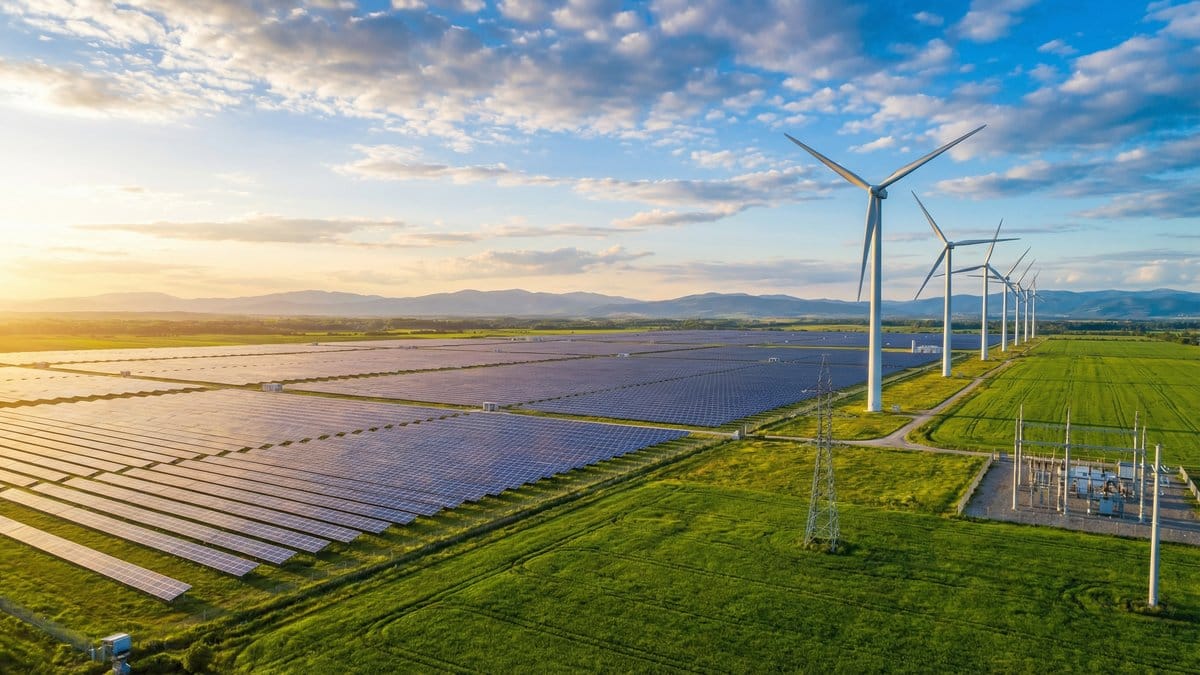
The transition toward renewable energy sources continues to accelerate, driven by a combination of policy support, technological advancements, and evolving corporate sustainability mandates. Wind and solar power are now producing more electricity in the U.S. than coal, marking a significant milestone in the decarbonization of the power grid. The EIA's Annual Energy Outlook 2026 projects that natural gas, solar, and wind will supply the vast majority of electricity generation capacity growth, accounting for a combined 80% of generation in most scenarios by 2050. This structural shift is underpinned by substantial capital deployment, with clean energy investments in the U.S. totaling approximately $22 billion in the fourth quarter of 2025 alone, led by solar ($11.5 billion) and battery storage ($8.4 billion) projects. Global renewable power capacity reached a record 5,149 gigawatts in 2025, according to S&P Global Energy CERA, extending record growth from the prior year.
Despite this strong momentum, the renewable sector faces several near-term challenges. Supply chain constraints, interconnection delays, and the higher cost of capital resulting from elevated interest rates have impacted project economics and timelines. Furthermore, the regulatory environment remains complex, with recent executive actions and policy shifts creating pockets of uncertainty for developers. However, the long-term trajectory remains clear. Innovations in energy storage, grid modernization, and emerging technologies like advanced nuclear and green hydrogen are expanding the addressable market for clean energy solutions, ensuring that the sector will remain a primary driver of infrastructure investment over the coming decades. The U.S. is expected to add approximately 99% of its new electricity capacity from renewable sources in 2026, led by solar, wind, and growing battery storage deployments.
Investment implications: The renewable energy sector offers diverse opportunities across the value chain, from equipment manufacturers to project developers and utility-scale operators. Given the current macroeconomic environment, investors may find the most attractive risk-adjusted returns in established, well-capitalized companies with visible project pipelines and strong power purchase agreements. Additionally, the growing need for grid stability and energy storage presents a compelling sub-sector for investment. While policy risks and interest rate sensitivity warrant careful consideration, the secular growth trend in clean energy deployment provides a robust foundation for long-term capital appreciation.
Energy Stocks & Outlook
Energy equities have demonstrated strong performance in recent months, buoyed by the surge in underlying commodity prices and a renewed focus on capital discipline. The Energy Select Sector SPDR ETF (XLE) has seen significant inflows and price appreciation, with the fund delivering a year-to-date return of approximately 33% as crude prices surged. Major integrated oil companies, such as Exxon Mobil (XOM) and Chevron (CVX), have been primary beneficiaries of this trend. These industry giants are leveraging their scale, diversified operations, and strong balance sheets to generate substantial free cash flow, which is being aggressively returned to shareholders through reliable dividends and expansive share repurchase programs. Approximately 70% of analysts covering Chevron currently hold a “Buy” or “Strong Buy” rating, reflecting broad institutional confidence in the sector's near-term earnings power.
Looking ahead, the consensus for full-year energy sector earnings growth tops 25% for 2026, with sequential acceleration expected throughout the year as higher realized commodity prices flow through to corporate bottom lines. The top three XLE holdings — Exxon Mobil, Chevron, and ConocoPhillips (COP) — collectively plan to return over $60 billion in capital to shareholders over the next year, underscoring the sector's commitment to rewarding investors. While geopolitical resolution could introduce near-term price volatility, the structural damage to Middle East energy infrastructure and the ongoing global demand for hydrocarbons suggest that energy companies will continue to operate in a favorable pricing environment for the foreseeable future. A balanced portfolio approach that incorporates both traditional energy cash-flow generators and strategic investments in clean energy infrastructure may offer the most resilient posture for navigating the evolving energy landscape.
Disclaimer: This analysis is for informational and educational purposes only and should not be considered financial advice. Energy sector investments carry significant commodity price volatility and geopolitical risks. Always conduct your own research and consult with a qualified financial advisor before making investment decisions.