



Market Overview
On May 20, 2026, global stock markets faced persistent downward pressure as a global bond market selloff, rising inflation anxieties, and mounting geopolitical tensions weighed heavily on investor sentiment. In the United States, major indexes registered their third consecutive loss, moving further away from all-time highs. The S&P 500 index declined by 0.67% to close at 7,353.61, while the Dow Jones Industrial Average dropped 0.65% — or 322.24 points — to finish at 49,363.88. The tech-heavy Nasdaq Composite sank 0.84% to 25,870.71. The Russell 2000 small-cap index also retreated as the broader market selloff extended across all major capitalizations.
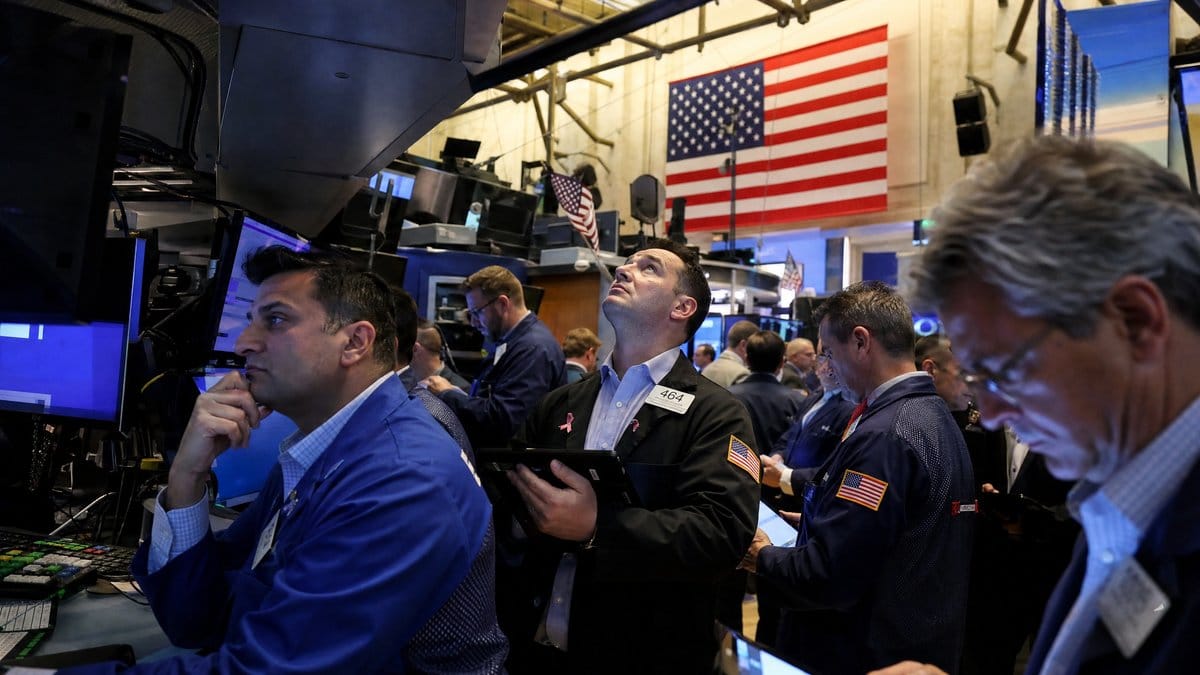
The principal driver of the current market retreat remains the fixed-income sector, where global bond yields surged significantly. The yield on the benchmark 10-year Treasury note climbed to 4.687%, its highest level since January 2025, reflecting rising concerns that elevated energy costs will compel central banks — particularly the Federal Reserve — to consider interest rate hikes rather than the long-anticipated cuts. Six of the 11 major S&P 500 sectors ended lower, with technology and communications services providing the biggest drags on the benchmark index. The defensive healthcare sector led gains with a 1.1% advance, while materials was the biggest sector decliner, falling nearly 2.3%. Higher yields often put pressure on shares of high-growth companies because their valuations depend heavily on future profit expectations.
Top Market Movers
Nvidia (NVDA) — Earnings Anticipation Drives Volatility
Shares of AI chip leader Nvidia (NVDA) experienced a three-day losing streak ahead of its highly anticipated quarterly earnings report scheduled for after the bell on Wednesday. Traders are pricing in a massive $355 billion swing in Nvidia's market value following the results, according to options market data. Analysts polled by LSEG expect the company's bottom line to have more than doubled year over year, with consensus estimates calling for earnings of $1.78 per share on revenue of $79.2 billion — representing a 79.5% year-over-year increase. Nvidia's stock has climbed approximately 40% from the April lows, and the company is approaching a potential $6 trillion market capitalization.
Investment implications: Nvidia's performance will be closely watched as a key indicator of the AI trade and broader technology sector health. A strong report could provide a much-needed catalyst for the broader market, while a miss could exacerbate the current tech-led selloff and put pressure on semiconductor valuations. Investors should monitor the results carefully and consider the risk-reward profile before making any position changes.
Home Depot (HD) — Q1 Results Beat, But Caution Remains
Home Depot (HD) reported first-quarter fiscal 2026 net earnings of $3.3 billion, or $3.30 per diluted share, on net sales of $41.8 billion — an increase of 4.8% from the same period in fiscal 2025. Comparable sales increased 0.6%, and the company reaffirmed its full-year fiscal 2026 guidance, projecting total sales growth of approximately 2.5% to 4.5%. However, CEO Ted Decker noted that underlying demand remained relatively similar to fiscal 2025, despite greater consumer uncertainty and housing affordability pressure. Adjusted diluted EPS came in at $3.43, compared to $3.56 in the year-ago period.
Investment implications: Home Depot's results suggest that consumer spending on home improvement projects remains resilient, but affordability concerns and a challenging housing market could weigh on future growth. Investors should monitor housing market data and consumer confidence indicators for further insights into the trajectory of discretionary spending.
Akamai Technologies (AKAM) — Convertible Bond Offering Weighs on Shares
Cloud infrastructure firm Akamai Technologies (AKAM) saw its stock end down 6.3% after the company announced a $2.6 billion convertible bond offering. The market's negative reaction reflects investor sensitivity to corporate borrowing in an environment where rising interest rates are increasing the cost of capital. On the Nasdaq, declining issues outnumbered advancers by a 2.07-to-1 ratio, while on the NYSE, declining issues outnumbered advancers by a 2.66-to-1 ratio, underscoring the broad-based nature of the selloff.
Investment implications: The market's negative reaction to Akamai's debt issuance highlights investor sensitivity to corporate borrowing in a rising interest rate environment. Companies seeking to raise capital may face higher costs and increased scrutiny from investors. Dilution risk from convertible offerings is particularly pronounced when equity valuations are elevated.
Economic Data & Fed Watch
The macroeconomic landscape is increasingly dominated by inflation concerns and shifting expectations for Federal Reserve policy. With inflation expectations rising, the 10-year Treasury yield surged for a third straight day to 4.687%, its highest level since January 2025. The 30-year U.S. Treasury yield advanced past 5.20%, reaching its highest level since 2007. Brent crude futures settled above $104 per barrel, remaining elevated as traders monitored the ongoing Middle East conflict which has all but closed the Strait of Hormuz — a crucial energy conduit.
Traders have started to price in higher probabilities for rate hikes from the Federal Reserve. The latest bets on a 25-basis-point increase in rates for December were at a 41.7% probability, while the probability for a 50-basis-point hike was 15.7%, up from just 4.7% a week ago, according to CME Group's FedWatch tool. A Reuters poll of economists found that the Fed is expected to avoid cutting rates this year, with war-driven inflation seen as the primary constraint. Investors are eagerly awaiting the release of the FOMC minutes from the Fed's last policy meeting for clues on the extent of policymakers' support for pivoting to a neutral stance from an easing bias.
Investment implications: The prospect of higher interest rates for a longer period poses a significant headwind for equities, particularly growth stocks. The rapid rise in global government bond yields is altering the traditional equity risk premium, forcing institutional asset managers to demand a higher yield for holding equities. Investors should consider defensive sectors and companies with strong balance sheets and pricing power to navigate the challenging macroeconomic environment.
International Markets

In Asian trading, the impact of surging bond yields triggered a broad wave of profit-taking, particularly in technology and export-oriented sectors. The MSCI Asia Pacific gauge declined by 1.2%, highlighting widespread regional vulnerability. Japan's Nikkei 225 fell by 0.44% to close at 60,550.59, as a weakening yen and shifting monetary policy expectations forced domestic equity liquidations. In Hong Kong, the Hang Seng Index rose slightly by 0.43% to 25,784.92. South Korea's KOSPI index experienced a sharp selloff, plunging nearly 2% during early trade, compounded by an announced labor strike at regional technology giant Samsung Electronics. Australia's ASX 200 dropped 1.31%, pulled lower by heavy selling in the financial and technology sectors.
European markets showed relative resilience during their previous closing session. Germany's DAX gained 1.37% to reach 24,640.76, while London's FTSE 100 edged up 0.80% to close at 10,331. The Euro Stoxx 50 climbed 0.94% to 5,904.17. The pan-European Stoxx 600 remained broadly flat at 611.34. European equities temporarily clung to gains on hopes of potential diplomatic breakthroughs in the Middle East, yet the underlying sentiment remained restricted by core inflation worries. In currency markets, the U.S. dollar strengthened against major peers, with EUR/USD falling 0.44% to 1.1604 and USD/JPY rising 0.13% to 159.04.
Looking Ahead
The near-term direction of global stock indices will likely depend on whether upcoming mega-cap technology results can justify current price-to-earnings multiples. The most closely watched event will be Nvidia's fiscal Q1 2027 earnings report, due after the bell on Wednesday, May 20. Given Nvidia's status as the world's most valuable company and the bellwether of the AI trade, its results are expected to reverberate across markets. Analysts expect EPS of $1.78 on revenue of $79.2 billion — a 79.5% year-over-year increase.
On the economic data front, investors will be closely monitoring the release of the FOMC meeting minutes for insights into the Federal Reserve's policy deliberations. Additionally, global PMI data for May is scheduled for release later in the week, which will provide important signals about the health of manufacturing and services sectors worldwide. The ongoing geopolitical situation in the Middle East and its impact on oil prices will also remain a critical variable, with Brent crude hovering above $104 per barrel.
Looking further ahead, the week of May 25–31 will bring additional economic data including key end-of-month indicators and the first half-year wrap-up for markets. Investors should remain vigilant about the interplay between energy prices, inflation expectations, and central bank policy as these factors continue to shape the investment landscape heading into the summer months.
Disclaimer: This analysis is for informational and educational purposes only and should not be considered financial advice. Market conditions can change rapidly, and past performance does not guarantee future results. Always conduct your own research and consult with a qualified financial advisor before making investment decisions.