


Palantir Stock Surges Despite Wall Street Skepticism

Despite Wall Street’s concerns about its high valuation, Palantir Technologies has attracted billions of dollars from retail investors this year, making it one of the most popular stocks among individual traders. The data analytics company, which went public in 2020, has seen its share price surge over 150% in 2025 and nearly 3,000% in the past three years, driven by the artificial intelligence boom and its contracts with government agencies. However, with a price-to-earnings multiple of around 450x—far exceeding the S&P 500 average of 28x—many professional analysts remain cautious, rating the stock as a “hold.”
Why it matters for investors: The significant divergence between retail investor enthusiasm and Wall Street’s cautious stance on Palantir highlights the ongoing debate surrounding AI stock valuations. Investors must carefully consider whether the company’s growth prospects in AI and government sectors justify its premium valuation or if it represents speculative excess that could lead to a sharp correction. This case serves as a reminder of the risks associated with investing in high-growth, high-valuation stocks, where market sentiment can shift rapidly.
Nvidia Acquires AI Chip Startup Groq for $20 Billion
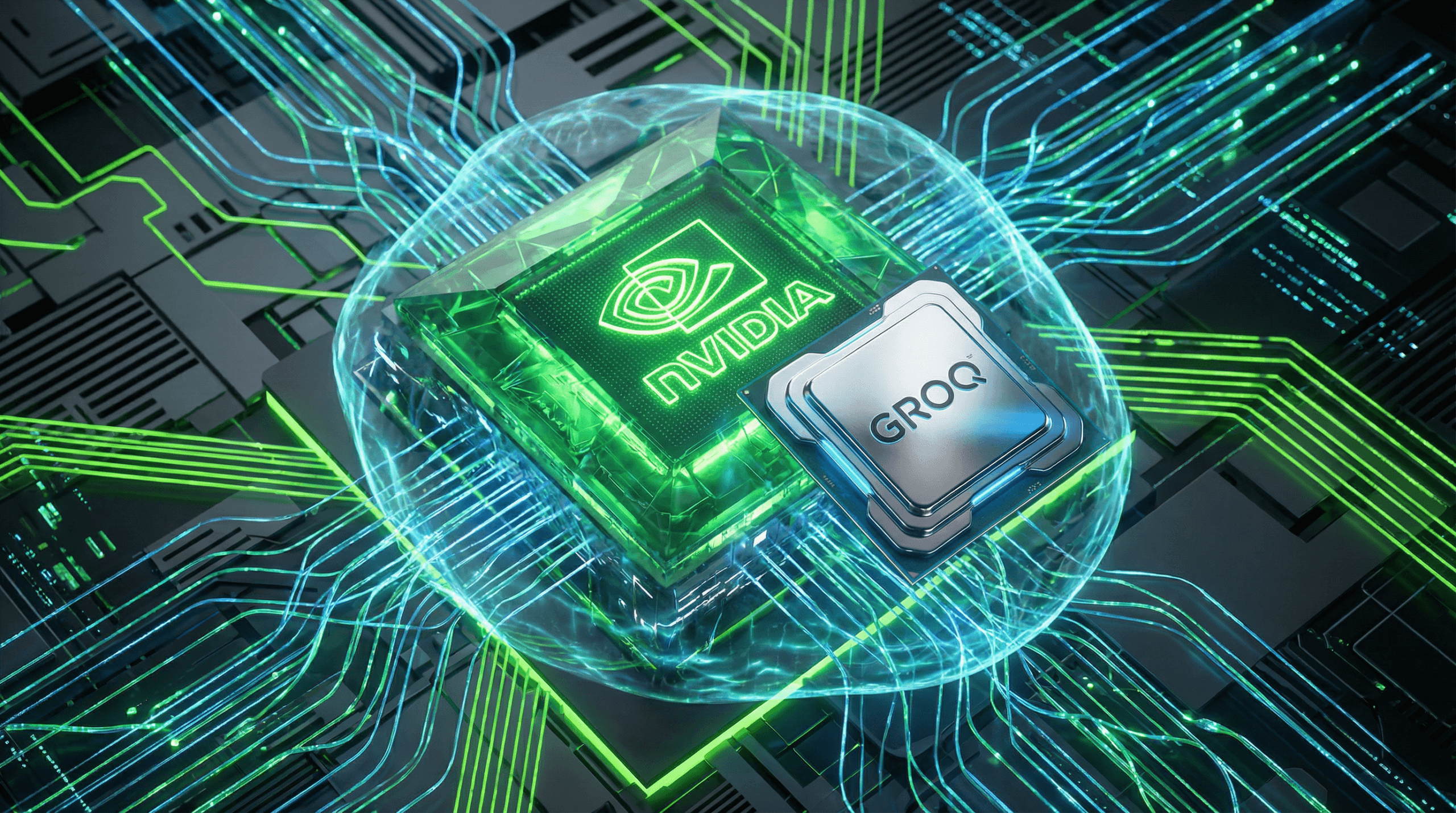
In its largest acquisition to date, Nvidia has agreed to purchase the assets of AI chip startup Groq for approximately $20 billion in cash. Groq, founded by former Google engineers who developed the Tensor Processing Unit (TPU), specializes in low-latency processors for AI inference tasks. The deal, which values Groq at nearly three times its September 2025 valuation of $6.9 billion, will see Groq’s CEO and senior leadership join Nvidia to integrate their technology into Nvidia’s AI platform. The move is seen as a strategic effort by Nvidia to consolidate its leadership in the AI chip market by absorbing a promising competitor.
Why it matters for investors: This acquisition underscores Nvidia’s aggressive strategy to maintain its dominance in the rapidly growing AI hardware market. The substantial premium paid for Groq highlights the increasing importance of specialized inference chips and signals that Nvidia is willing to pay a high price to secure its competitive edge. For investors, this reinforces Nvidia’s market leadership but also raises potential concerns about increasing industry concentration and the possibility of future regulatory scrutiny in the AI sector.
Citadel to Return $5 Billion in Profit to Investors
Hedge fund giant Citadel has announced it will return approximately $5 billion in profits to its investors in early 2026. The firm’s flagship Wellington fund posted a 9.3% gain for the year, and the distribution is part of a strategy to manage capital levels to align with perceived market opportunities. After the distribution, Citadel’s assets under management will be approximately $67 billion. Since 2017, the firm has returned over $32 billion to its investors and is ranked as the most profitable hedge fund since its inception in 1990, with over $83 billion in net gains.
Why it matters for investors: Citadel’s decision to return a significant portion of its profits, despite strong performance, signals a disciplined approach to capital management. It suggests the firm is prioritizing risk-adjusted returns over simple asset growth, a move that should be viewed positively by investors. For those in the alternative investments space, this action highlights the importance of manager discipline and the value of a proven track record in generating long-term, sustainable returns.
Value Stock Rotation Could Strengthen in 2026
Market analysts are observing early signs of a potential rotation from growth stocks to value stocks, a trend that could accelerate in the new year. After a prolonged period of outperformance by growth sectors, particularly technology, investors are beginning to look for opportunities in more traditionally undervalued areas of the market. This shift is occurring as Wall Street strategists release their 2026 outlooks, with some expressing concerns about a potential U.S. economic slowdown.
Why it matters for investors: A rotation into value stocks would mark a significant shift in market leadership and could have a broad impact on portfolio performance. Value sectors, such as financials, industrials, and energy, often perform well in environments of rising interest rates and economic uncertainty. Investors who are heavily concentrated in growth stocks may want to consider rebalancing their portfolios to include more value-oriented investments to mitigate risk and capitalize on this potential trend.
Wall Street’s Post-Christmas Gift for Investors
The stock market has historically exhibited a seasonal pattern known as the “Santa Claus Rally,” which often begins on the first trading day after Christmas. This period, which extends through the first two trading days of the new year, has historically been one of the strongest for equities. The S&P 500 has risen approximately 77% of the time during this window, driven by a combination of holiday optimism, the investment of holiday bonuses, and institutional investors positioning their portfolios for the year ahead.Why it matters for investors: While not a guarantee of future performance, the Santa Claus Rally is a well-documented seasonal trend that can provide a short-term boost to the market. It is important for investors to be aware of this pattern to avoid being caught off guard by year-end market movements. However, investment decisions should not be based solely on seasonal effects, and investors should remain mindful of broader economic conditions and market valuations as they head into the new year.